For decades, physical security has been built around visual data. Cameras, video management systems, and analytics form the backbone of most deployments, and for a long time that was enough. But as facilities grow more complex and expectations around response time rise, a clear limitation has emerged. Seeing an incident is not the same as being able to do something about it.
The next evolution of security is not about seeing more. It is about responding faster and coordinating better. That is where integrated cameras and audio, delivered through IP intercoms and IP speakers, is taking on a far more strategic role than it has held in the past.
Video Tells You What Is Happening. It Cannot Change It.
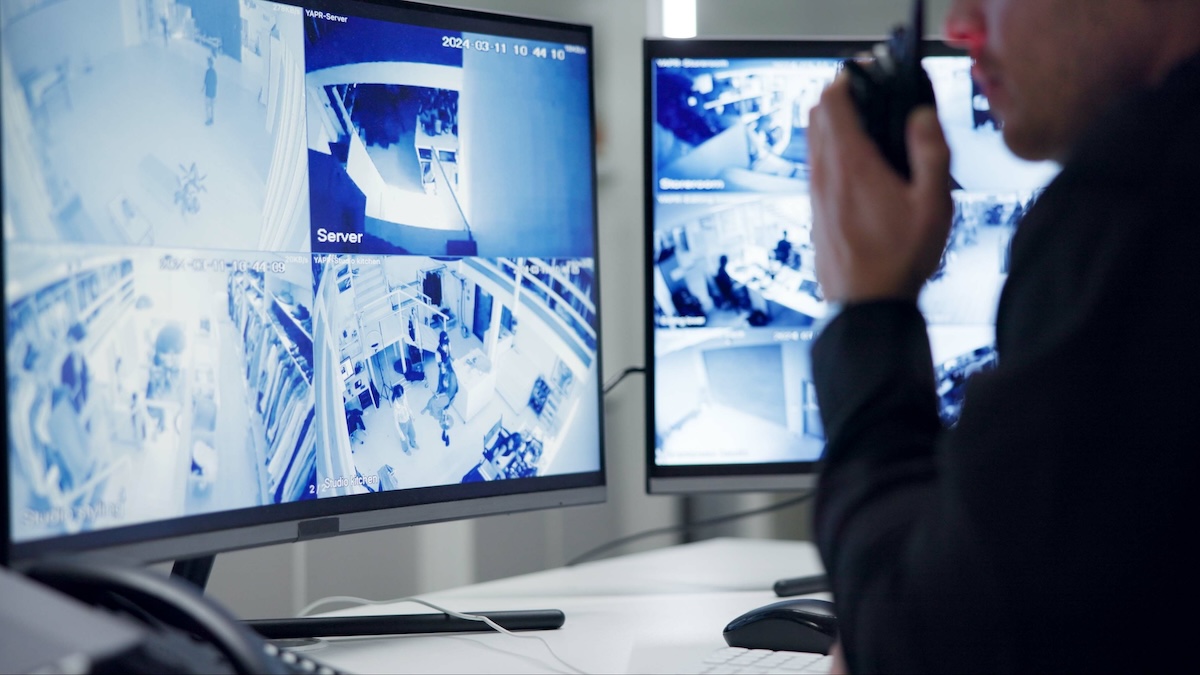
A camera is an observational tool. It identifies what is occurring and records it for later review, but on its own it does not intervene. By the time footage is reviewed, the incident is usually over and any loss has already happened.
This is not a criticism of video as a technology. It is a recognition of what video alone can and cannot do. Research into surveillance effectiveness has consistently found that passive video has limited preventive impact on crime when there is no real-time monitoring or rapid response capability tied to the camera feeds. The camera captures the event. Something else has to stop it.
That something, increasingly, is audio.
What Audio Adds to a Security System
Audio introduces a capability video does not have on its own: interaction. Where video identifies a situation, IP audio lets an operator verify intent and intervene in the moment, before an incident escalates.
The outcomes data makes the difference concrete. In an analysis of over 2 million monitoring requests across thousands of retail locations, live voice-down interventions resolved the overwhelming majority of incidents without requiring police involvement. A live human voice, especially an unexpected one, breaks the sense of anonymity that emboldens bad behavior and interrupts most incidents before they result in loss.
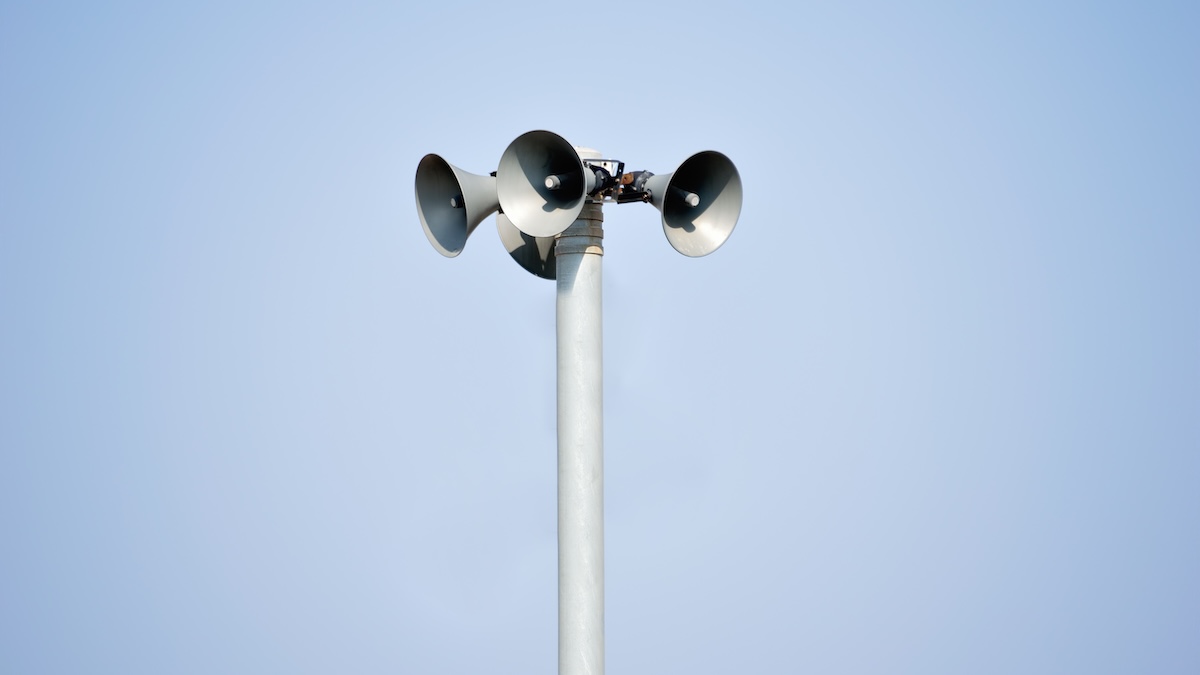
This is the shift that matters: audio turns a security system from a passive monitoring function into an active engagement layer. It is the practical difference between reactive security that documents what happened and proactive security that changes the outcome. Digital Acoustics’ IP intercoms and IP speakers and Multi Zone Controller are the endpoints that make that engagement layer possible, integrating directly into the platforms security teams already rely on.
Not All Integration Is Equal
Adding audio to a security system is only as valuable as the way it is integrated. A common shortcoming in security deployments is under-integration, where systems coexist on the same site but do not truly work together. Each has its own interface, its own workflow, and its own silo, and operators are left switching between them under pressure.
The most basic form of integration connects an audio device directly to a platform such as a video management system. This is useful but limited, often one-directional and difficult to scale across a large environment. A more capable approach treats audio as a core communication layer rather than an add-on, connecting public address, intercom, sensors, video, and access control so that an event in one system can trigger a coordinated response across all of them.
Digital Acoustics is built for that deeper level of integration. Its multi-zone architecture and native integrations with IMMIX, InformaCast, and a range of video management and access control platforms, listed on the integrations page, are designed for coordinated multi-system response rather than isolated device connections. Digital Acoustics has an API for companies with a custom management system to access our IP intercoms and IP speakers to add audio to their system.
The Move Toward Workflow-Driven Security
Modern security architecture is shifting toward automation. Instead of relying entirely on manual operator action, systems are increasingly expected to detect an event, verify it, trigger an appropriate response, and notify personnel at the same time.
Consider a straightforward scenario. A sensor detects an anomaly, a camera verifies the event, an audio system automatically issues a warning, and staff are alerted simultaneously. What matters is not any single technology but how seamlessly they interact to produce a coordinated response in seconds.
There is a balance to strike here. More integration is not automatically better. Over-engineering a system raises cost, complicates maintenance, and can reduce reliability. The goal is the right balance of depth, flexibility, and usability, with workflows that can evolve as needs change rather than static integrations that lock a facility into one rigid configuration. Digital Acoustics’ management system TalkMaster™ FOCUS supports automated, event-driven audio responses and scheduled actions, and Digital Acoustics’ open architecture lets integrators design workflows that fit the specific site.
What This Means for Integrators and End Users
The role of the security integrator is changing. Success was once measured by the ability to deploy and connect systems. Today the expectation is higher: to understand operational workflows, design integrated experiences, enable automated responses, and ensure a system can scale over time.
End users, in turn, are looking for more than another standalone subsystem. They want a coordinated ecosystem where video, audio, access control, and analytics function as part of a single operational picture. Audio is becoming a strategic enabler of that ecosystem, the layer that adds real-time communication and coordinated action to everything else.
The distinction between these systems will continue to blur. The question is no longer whether they can be integrated, but how effectively they can be orchestrated, because the value of a security system is not defined by how many technologies it includes. It is defined by how well they work together when it matters most.
To learn how Digital Acoustics supports integrated, audio-enabled security deployments, explore the remote location audio monitoring page or contact the team.