When a facility starts looking at moving its public address audio to IP, the assumption is usually that the speakers must be replaced. They do not need to be. In most buildings the speakers and intercoms work well. However, they may be receiving audio from an antiquated analog amplifier. Modernizing audio does not require replacing speakers, it requires changing what feeds them.
This is the idea behind converting an analog system to IP, and understanding it changes how a facility approaches an upgrade. Here is how existing speakers become IP endpoints, and what they can do once they are on the network.
You Do Not Have to Replace the Speaker to Modernize a System
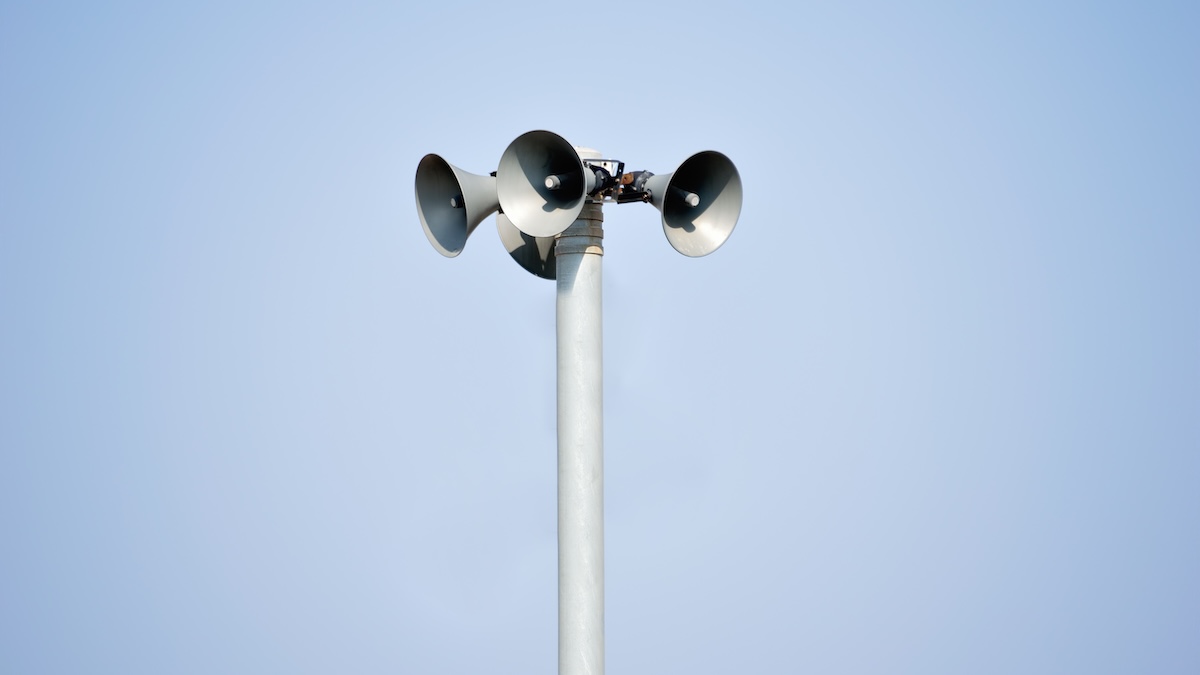
An analog audio endpoint is any device that produces or captures sound at the edge of the system: a speaker, a horn, an intercom call station. In a traditional analog system, these are passive devices wired back to a central amplifier.
That word, passive, is the key. A speaker simply converts electrical energy into sound. That is precisely why the signal source can be swapped without touching the speaker itself. The speaker keeps doing the one thing it has always done, while everything about how it is fed and controlled changes around it.
This reframes the upgrade question entirely. It is not "replace your speakers," it is "change what drives them."
Analog Endpoint vs IP Endpoint: What Actually Changes
An analog endpoint is a speaker connected by dedicated copper wire to a central amplifier, typically using 70V or 25V line technology in larger installations. Its behavior is fixed by the hardware it is wired to, and it has no independent identity on any network. If you want to change which zone it belongs to, you rewire it.
An IP endpoint is the same physical speaker, but now addressable on the Ethernet network with its own identity. It can receive audio as data and be assigned to zones in software. The physical sound-producing hardware has not changed at all. What has changed is that the endpoint is now individually addressable, controllable, and integrable with everything else on the network.
Put simply, this is not "replace your speakers," it is "give your existing speakers a network identity."
How the Conversion Actually Happens
The conversion is done by an IP amplifier installed between the network and the existing speaker. It connects to the network with a single Cat 5/6 cable and to the speaker through the existing speaker wire.
The IP amplifier does the actual work. It receives audio as data over the network, converts it back into an analog signal, and drives the connected speaker or group of speakers. In many cases power is delivered over Ethernet (PoE), which eliminates the need for a separate power run to the device.
There are two common configurations. The amplifier can drive a single 8-ohm speaker directly, or it can drive a group of speakers using 70V matching line transformers. In some cases, the existing analog amplifier can even stay in the chain, with the IP amplifier feeding its input. Either way, the outcome is the same: the speaker and wiring remain in place, and a small device at the distribution point brings the entire zone onto the network. This same principle applies whether the endpoint is a single speaker, a group of speakers, or an intercom call station.
What the Endpoint Can Do Once It Is on the Network
Preserving existing speakers is only half the value. The other half is what those endpoints can suddenly do once they are on the network.
Zones become software-defined rather than fixed in wiring, so any endpoint can be assigned to any zone and reassigned at any time without physical changes. With the right amplifier, a converted endpoint can support not just one-way paging but half or full-duplex two-way communication, turning what was a speaker location into an intercom point. Once on the network, the endpoint can be reached by VoIP phone systems over SIP, by mass notification platforms, and by security and video systems. And every endpoint can be configured, scheduled, and health-monitored from a single software platform rather than requiring someone to physically visit the hardware.
Digital Acoustics' IP7-FX amplifiers perform exactly this endpoint conversion. They support paging and announcements, half or full-duplex two-way communication, VoIP phone systems over SIP 2.0, TalkMaster™ FOCUS, and integration with InformaCast, BellCommander, and other platforms listed on the integrations page.
Why This Approach Makes Sense
The case for endpoint conversion comes down to a few practical points.
It protects existing investment. The speaker and wiring infrastructure that a facility already paid for stays in service, and only the driving hardware is added. It is also incremental. Endpoints can be converted zone by zone rather than all at once, which lets a facility migrate on a realistic timeline and budget instead of absorbing a single large capital cost. And it is future-oriented. Once an endpoint is an addressable device on the network, it can take on new capabilities through software rather than requiring another hardware replacement down the line.
Modernizing audio, in other words, is not about tearing out the speakers you have. It is about giving them a place on the network, and the hardware to do that is straightforward and proven. For a real-world example of this approach applied end to end, the post on upgrading a school PA system to IP without replacing speakers walks through a full retrofit.
To discuss endpoint conversion for your facility, explore the IP amplifiers page and the PA and two-way communications design service, or contact the Digital Acoustics team.