Most K–12 schools are sitting on a communications problem they haven’t fully solved yet. The speakers work. The wiring is in the walls. But the amplifier in the closet has no network connection, no integration with emergency notification platforms, and no ability to support two-way communication with classrooms. It’s analog infrastructure doing an analog job in a world that’s moved on.
A full rip-and-replace sounds like the answer, but it rarely is, at least not immediately. The cost is significant for ripping out the speakers, rewiring and installing new speakers/intercoms The disruption is real, and for most IT and facilities teams, pulling speakers out of ceilings and rewiring mid-year isn’t an option. The practical question becomes: can we get IP capability without starting from scratch?
The answer is yes.
Understanding the Three Systems in a School
Before getting into the retrofit, it helps to understand what each system actually does, because they serve different purposes and work together differently than most people expect.
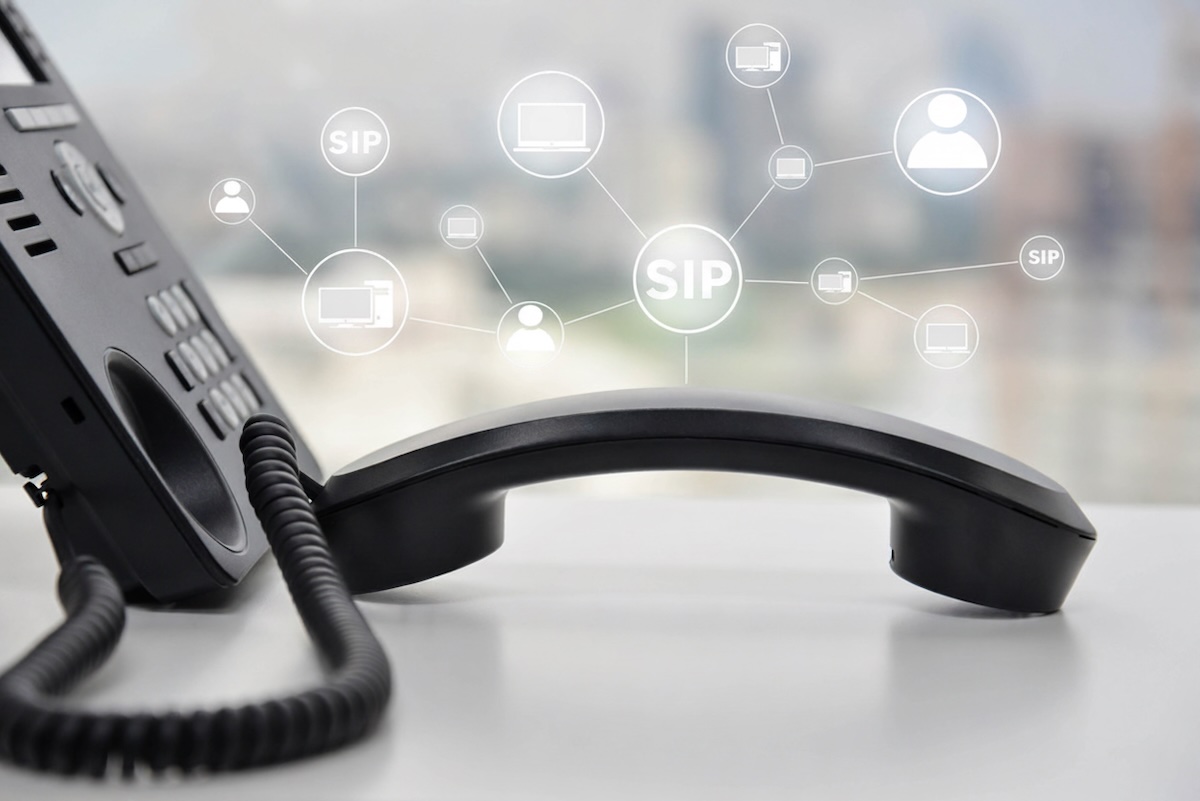
A VoIP phone system connects classrooms, offices, and the outside world. It handles day-to-day calls but can also initiate announcements over the PA system or communicate directly with an IP intercom. An intercom is a two-way communication system, typically between a classroom and the main office, enabling staff to speak directly with a specific room and receive a response. The PA system broadcasts announcements, bells, and tones throughout the building via the speaker system.
In a modern IP environment, these three systems don’t operate in silos. They can be unified under a single software platform, or layered together depending on what the school already has in place.
What “Upgrading Without Replacing Speakers” Actually Means
Analog speakers are passive devices. They receive an audio signal and produce sound. They don’t know or care where that signal comes from. That’s the key insight behind a retrofit approach: you don’t need to replace the speakers. You need to replace what’s driving them.
Digital Acoustics’ IP amplifiers convert existing analog speakers and/or intercoms into IP endpoints on the network. The speakers and/or intercoms stay exactly where they are. The wiring stays in the walls. What changes is the signal source, and with it, the entire capability of the system.
The IP7-FX and IP7-SS40 are the core hardware components that makes this possible. These IP Amplifiers connect to your analog speakers via the existing wiring and access your network via Cat 5/6 cabling (the IP7-FX is powered via PoE). They bridge analog speakers and intercom call stations onto the IP network, and support paging/announcements, half or full-duplex two-way communication, VoIP phone systems (SIP 2.0), TalkMaster™ FOCUS, InformaCast, Bell Commander, video management systems, fire safety, panic and other emergency systems. A school that installs IP7-FX or IP7-SS40 amplifiers at existing distribution points or at the speaker or intercom gets a modern, network-managed IP paging and intercom system without touching a single classroom speaker.
What the Upgraded System Can Do That the Old One Couldn’t
Once analog speakers or intercom call stations are connected through IP amplifiers, the system gains capabilities that simply weren’t possible before.
Zone-based paging. Manual or automated announcements can be targeted to individual classrooms, specific wings, a single building, or the entire campus, programmatically, without broadcasting everywhere at once.
Two-way classroom communication. Staff can initiate a call to a specific room and receive a response. This is a daily operational tool for IT teams, administrators, and facilities staff, not just a safety feature.
Flexible software options. Schools can choose the approach that fits how they work. Digital Acoustics TalkMaster™ FOCUS Management Platform can handle everything on its own, managing two-way intercom calls, PA announcements, scheduled bells, and automated alerts from a single platform. Schools with an existing VoIP phone system can use it alongside TalkMaster™ FOCUS for announcements and classroom-to-office communications. For districts that want to use Bell Commander it is supported for schools that need sophisticated bell scheduling and tones, and it works in conjunction with TalkMaster™ FOCUS and existing VoIP phone system. Our products also integrate directly with InformaCast, enabling that platform to manage all paging and notification functions. See the full list of supported integrations.
Patented Fail Forward™ technology. If network connectivity is interrupted to the server running the system, the system maintains continuity of operation by shifting to another server. For a school, this matters most in exactly the moments when you can’t afford a failure.
What the Process Looks Like
A retrofit project follows a straightforward path:
Assess existing infrastructure, including speaker locations, wiring condition, current amplifier setup, and network availability at key distribution points. Identify where IP7-FX and IP7-SS40 amplifiers will be placed to bridge analog audio endpoints onto the network. Configure endpoints in TalkMaster™ FOCUS or other management system and set up paging zones that match the school’s physical layout and communication needs. Integrate with the existing VoIP phone system and any safety system or notification platform already in use.
Most of this work can be completed without touching classroom speakers at all. For districts that want expert guidance through design and deployment, Digital Acoustics offers a PA and two-way communications design service for schools and their integrators.
Why Schools Choose This Approach
The business case is straightforward. A retrofit preserves the capital already invested in speakers and wiring. It costs significantly less than a full system replacement. It’s minimally disruptive, and it delivers a platform that grows with the school’s needs, supporting two-way intercom, video integration, and access control as those requirements emerge. It scales equally well for a single-building charter school and a multi-campus district.
Schedule a free consultation with the Digital Acoustics team to talk through what a retrofit would look like for your school.